Copper Gutters: Cost, Lifespan, and How They Compare to Aluminum
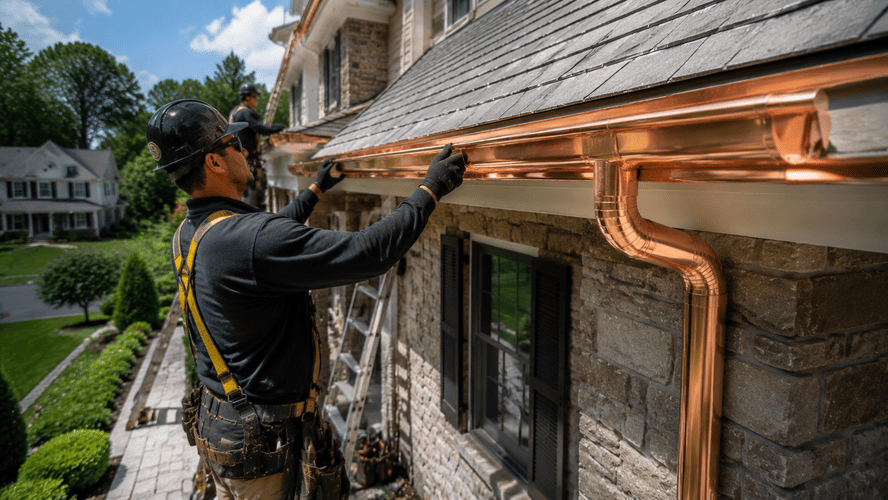
Walk through an older neighborhood in Fairfield County and you can usually spot the copper gutters before you consciously notice them — a soft brown-black sheen on a newer install, or a streak of green-blue verdigris on something that’s been up for thirty years. Copper is the material homeowners ask about when they want their gutters to look like part of the house’s architecture instead of a functional afterthought bolted onto the roofline. It’s also the most expensive common option by a wide margin, which is usually the second question right after “what does it look like.”
Quick Answer on Cost
Copper gutters typically run $20 to $40+ per linear foot installed, compared to $6–$12 for seamless aluminum. For an average home with 150–200 feet of gutter, that puts a full copper system somewhere between $3,500 and $8,000, sometimes higher on homes with elaborate rooflines, half-round profiles, or hand-formed decorative elements. The gap versus aluminum is real, and it’s worth understanding exactly what that extra money is buying before deciding it’s not worth it.
What Actually Makes Copper Different
Copper isn’t priced high because of marketing — the raw material itself costs several times more than aluminum coil stock, and it’s heavier, which changes how it’s handled and hung. It also isn’t painted or anodized; the surface you see is the metal itself, which is why it changes color over the years instead of staying static like a painted aluminum system does. Seams at corners and downspout connections are typically soldered rather than sealed with caulk or rivets, which is both more time-consuming to do correctly and considerably more durable — a properly soldered copper joint can outlast the sealant on almost any other gutter material by decades.
None of that is cosmetic. It’s the combination of raw material cost, weight, and the skilled labor soldering requires that adds up to the price difference.
K-Style vs. Half-Round: The Other Decision
Material aside, copper gutters come in two common profiles that matter almost as much as the metal choice. K-style gutters have a decorative, crown-molding-like front face and a flat back, and they’re the shape most people picture when they think “gutter” — functional, higher water capacity for their size, and compatible with standard modern hardware. Half-round gutters are a simple curved trough, historically the more traditional shape, and they’re the profile you’ll see most often on colonial and Victorian-era homes specifically because that’s what would have been installed originally. Half-round systems typically need slightly more frequent hanger support since the round shape flexes more under load, and they’re usually priced a bit higher than K-style in copper specifically because they’re more often hand-formed rather than machine-rolled.
Neither shape is objectively better — it’s largely a match to the house’s existing architecture, and on a historic renovation, matching the original profile is often the whole point of choosing copper in the first place.
How the Patina Develops
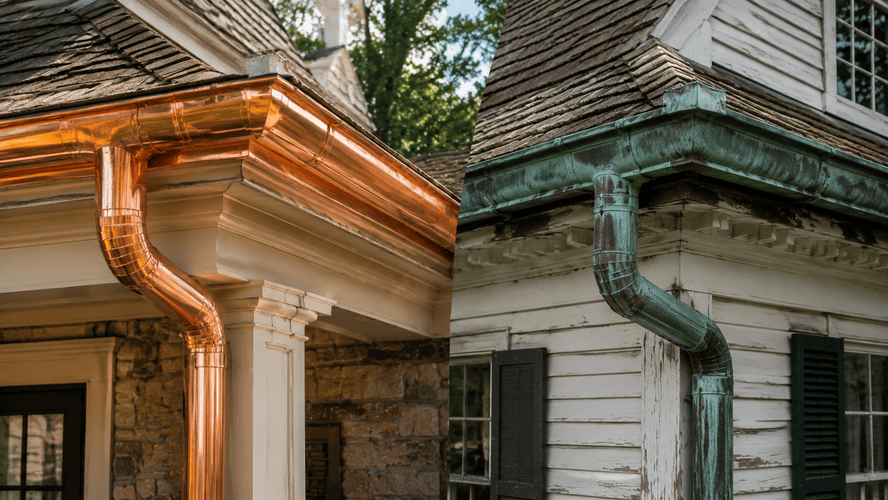
This is the part that surprises people who’ve only seen mature copper roofs and expect their new gutters to look the same immediately. Fresh copper installs bright, almost gold-pink — closer to a new penny than the aged green most people associate with the material. Over the first one to three years it darkens through shades of brown as it oxidizes, and depending on the climate and how much direct weather exposure the gutters get, it can take anywhere from fifteen to several decades to develop the blue-green verdigris patina people usually picture.
Coastal exposure changes that timeline noticeably — the salt air along the Sound accelerates oxidation compared to inland installations, so homes closer to the water tend to see the color shift happen faster than the same gutters would age fifty miles inland. If matching the aged look is important to you and you’re not willing to wait, some fabricators offer pre-patinated copper at a premium; otherwise, it’s a genuinely gradual process worth budgeting patience for, not just money.
How Long They Actually Last
This is where copper earns its price tag. Properly installed copper gutters routinely last 50 to 100+ years — copper’s corrosion resistance is exceptional, and it’s not unusual for the gutters to outlast several roof replacements on the same house. When copper gutter systems do fail prematurely, it’s rarely the copper itself; it’s almost always the fasteners, hangers, or an incompatible metal used somewhere in the system.
That last point is worth flagging directly: copper reacts galvanically with certain other metals, particularly aluminum and steel, when they’re in direct contact and exposed to moisture. Using the wrong hanger or fastener material can cause accelerated corrosion at exactly those contact points, undermining what should otherwise be a multi-generation installation. This is one of the more common mistakes in a rushed or budget installation, and it’s worth confirming with any installer that copper- or stainless-compatible hardware is being used throughout.
Copper vs. Aluminum: The Actual Trade-Off
Cost is the obvious difference — aluminum wins decisively on upfront price, typically a third to a half the cost of copper for the same linear footage. Lifespan flips that: aluminum systems generally last 20-30 years before replacement becomes worth considering, where copper measures its lifespan in generations rather than decades. Maintenance is roughly comparable day to day — both need periodic cleaning and both benefit from guards if there’s tree cover — but copper never needs repainting, since there’s no paint to fail or fade in the first place.
Aesthetically, this is genuinely subjective, but it’s not a close call functionally: aluminum is the practical choice for most homes, and copper is the choice for homeowners who want the material itself to be a visible, permanent feature of the house — often paired with a specific architectural style, a historic renovation, or simply the intention to never think about gutters again in their lifetime.
If You Like the Look But Not the Price
This is a real enough segment of homeowners that manufacturers built a whole product category around it: copper-penny or copper-toned aluminum gutters, finished with a baked-on coating designed to mimic copper’s color without the cost, weight, or soldering labor. It won’t develop a genuine patina over time — the color is static, the way any painted finish is — and it won’t last as long as real copper, but it runs close to standard aluminum pricing while giving a visual impression that reads as copper from the ground, which for a lot of homes is really the point.
It’s a legitimate middle option, not a downgrade to be embarrassed about — plenty of homes use copper-look aluminum specifically because true copper would be disproportionately expensive relative to the rest of the house’s finishes.
Maintenance and Repairs
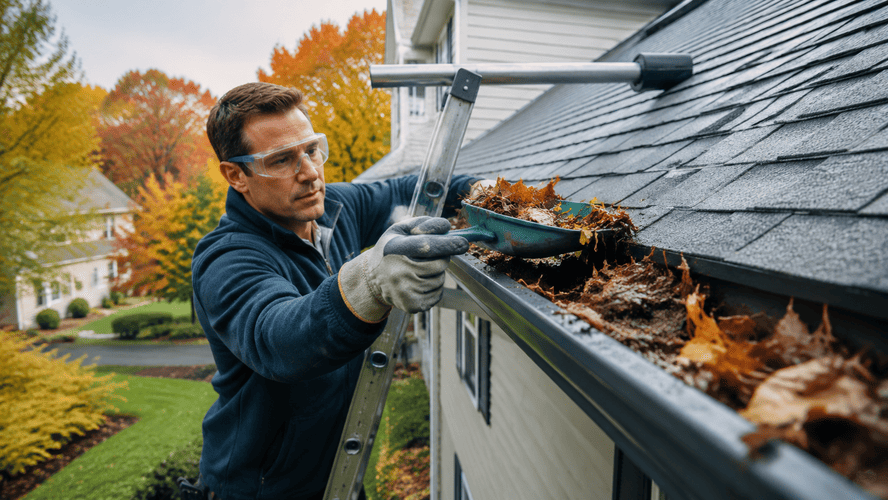
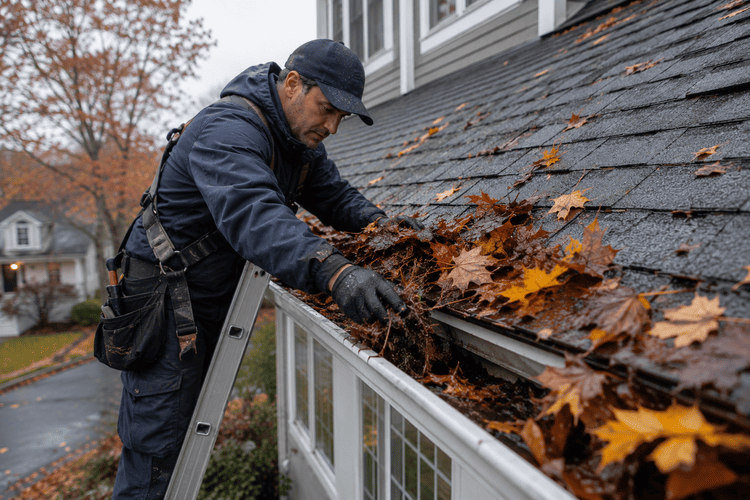
Routine cleaning is identical to any other gutter material — clear debris, flush with a hose, check the slope toward the downspouts. Where copper differs is repair work: a loose seam or a hole from debris impact needs to be re-soldered to be fixed properly, and that’s a torch-and-flux job that calls for actual sheet metal or tinsmith experience, not a caulk gun. It’s worth treating as a call-a-professional repair rather than a weekend fix, both because getting a clean, watertight solder joint takes practice and because open-flame work near a roofline isn’t something to improvise.
Quick Answers
How much do copper gutters cost per foot?
Typically $20–$40+ installed, compared to $6–$12 for aluminum. Half-round and hand-formed sections tend toward the higher end of that range.
How long do copper gutters last?
50 to 100+ years is standard for a properly installed system. Failures usually trace back to incompatible fasteners rather than the copper itself.
Do copper gutters need to be painted or sealed?
No — the natural patina process is the intended finish, and coating over it isn’t standard practice.
Is copper worth it over aluminum?
If long-term permanence and appearance matter more than upfront cost, yes. If you’re optimizing for the lowest reasonable price with a solid 20-30 year lifespan, aluminum remains the more practical choice for most homes.
Whether the answer for your house is real copper, a copper-look aluminum system, or standard seamless aluminum really comes down to the roofline, the architecture, and how long you’re planning to own the place. Elite Gutter Care installs and repairs copper gutter systems across Stamford and Fairfield County, including matching half-round profiles on older homes.