7 Signs Your Gutters Need Repair: How to Spot Damage Early
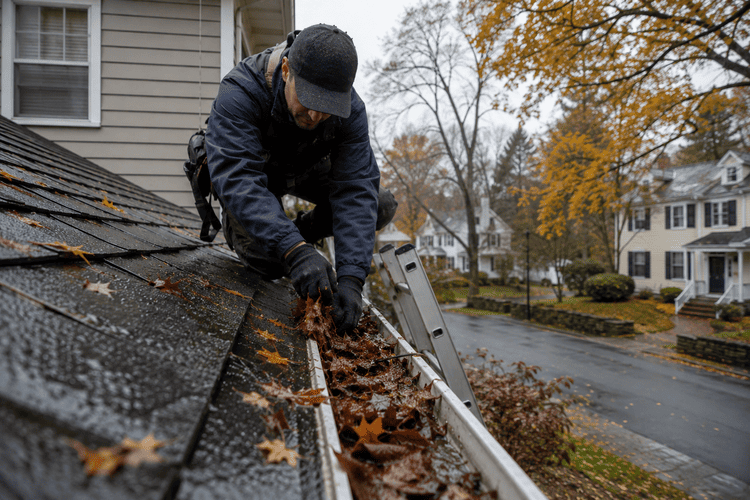
Many people in Connecticut go for years without checking their gutters. They often think that a simple cleaning is enough to solve every problem. However, even an empty gutter system can have hidden defects. These issues usually lead to wet basements during heavy fall storms or spring snowmelts. If you learn how to identify the main signs gutters need repair, you can fix small issues quickly. This approach saves you from the massive cost of replacing the entire drainage system later on.
Signs #1–3: What You Can See Without a Ladder
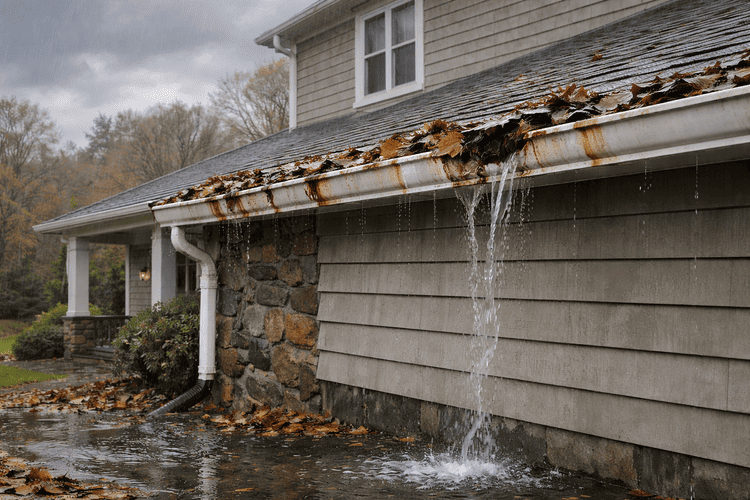
The weather in our state is very tough on metal because of high humidity and salt in the air near the coast. You should start by looking closely at the joints and corners of your gutters. Look for orange rust spots or paint that has started to flake off. If you ignore these gutter damage warning signs, small holes will appear very soon. Once that happens, water starts hitting your siding and house frame directly, causing wood rot.
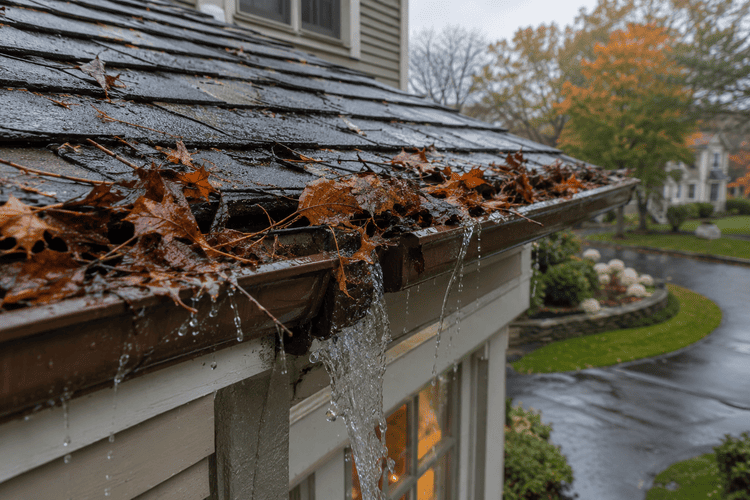
Take a walk around your yard after a rainstorm. Check the ground right under your roof line. If you see washed-out dirt in the grass or deep puddles near the foundation, your gutters are failing. These are the most common leaking gutters signs. They tell you that your seals are dried out or the metal has cracked. Look for water dripping from the middle of a straight section or overflowing where it should stay contained. You must fix these leaks immediately to prevent water from entering your crawl space or basement.
Signs #4–5: Sagging Gutters and Loose Fasteners
Ice buildup and heavy wet snow during Connecticut winters put a lot of pressure on metal brackets. This weight often causes the hardware to bend or warp. If you see that your gutter line looks crooked or one side is hanging lower, the system is no longer level. You will need a professional sagging gutters repair when the fasteners pull away from the wood. Without strong support, the gutters cannot handle the weight of heavy rain or leftover debris.
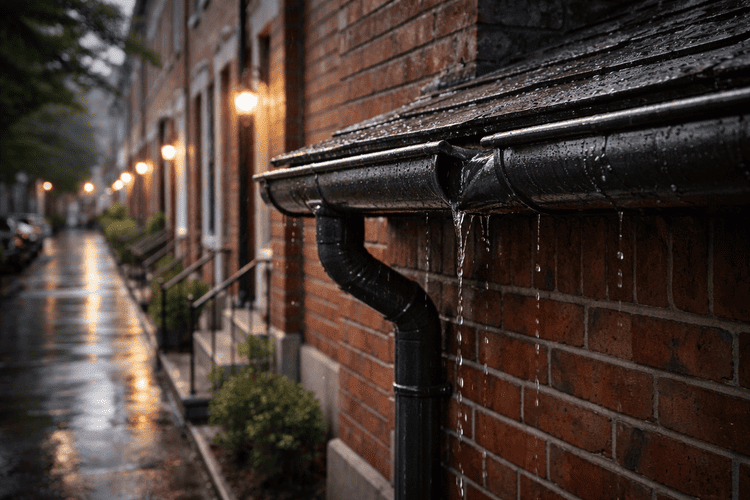
When the slope of the gutter is wrong, water sits still in certain sections. This standing water creates a perfect home for mosquitoes and mold. Over time, this extra weight pulls the gutter away from the fascia board. This gap allows moisture to rot the wooden edges of your roof. Understanding when to repair gutters helps you fix these alignment problems before the whole system falls off the house.
Signs #6–7: Hidden Damage You Might Be Missing
It is often very hard to see real damage while standing on the ground. Sometimes the metal has tiny cracks that you can only see from a ladder. Our region has sharp temperature swings that make metal expand and shrink constantly. This leads to material fatigue and cracked gutters problems. You might only notice these leaks during a massive summer thunderstorm when the water volume is at its highest point.
To check the true condition of your drainage, look for these specific issues:
- Orange streaks or rust stains on the white trim of your house.
- Small gaps between the back of the gutter and the wooden board it sits on.
- Paint flakes or tiny bits of metal sitting inside the downspouts.
- Mold growth or damp spots on the walls inside your attic.
- Screws or nails lying on the ground that have fallen out of the roof line.
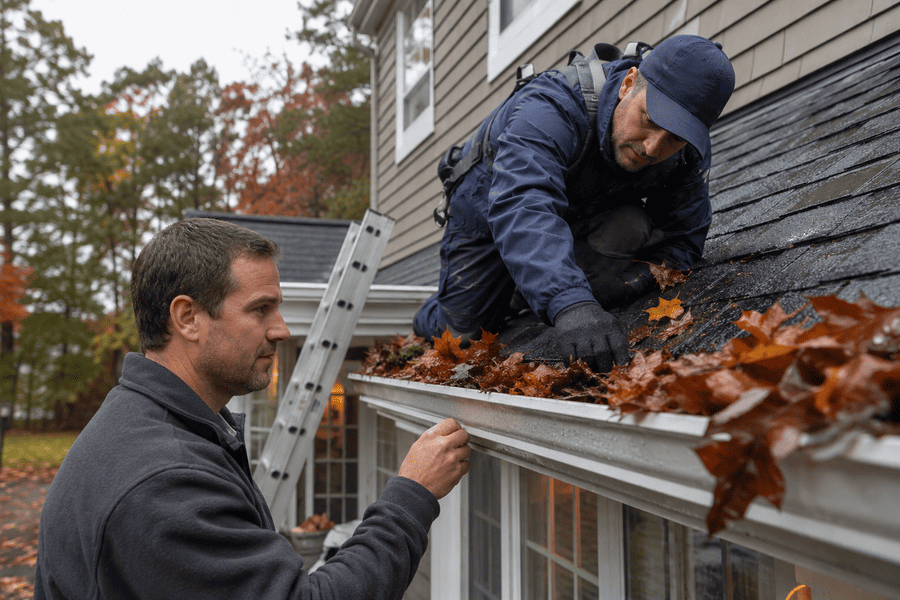
Each of these points is a strong reason to call for a technical inspection. Usually, different gutter repair signs show up at the same time, indicating a larger problem.
What to Do After Spotting These Signs
Many homeowners try to fix cracks with cheap caulk from a local hardware store. In the Connecticut climate, this usually only lasts a few days. A real repair requires professional-grade sealants and a proper check of the system’s level. If you see clear signs gutters need repair, you should not wait to call a specialist. A tiny crack today can turn into a cracked foundation by next year.
A professional team can tell you if a section can be fixed or if it is cheaper to just replace one piece. They will reinforce your joints and make sure the water flows correctly through every elbow. Catching these problems early costs much less than fixing a flooded home. Our experts are ready to inspect your property anywhere in Connecticut. We will fix your gutters quickly so your home stays dry for a long time.
FAQ
What are the most obvious signs that gutters need repair?
The most obvious signs are water pouring over the edge of the gutter during rain (overflow), visible cracks or holes in the gutter channel, and sections that are visibly sagging or pulling away from the fascia board. Orange rust stains on the exterior siding below the gutter line are another clear indicator — they show the gutter has been leaking for some time.
Can broken gutters damage a home’s foundation?
Yes, this is the most serious long-term consequence. When gutters fail, water pools at the base of your home’s foundation instead of being carried away by downspouts. Over months and years, this saturates the soil around the foundation, causing it to shift, crack, and allow water into the basement.
How do I know if my gutter is broken or just clogged?
A clogged gutter overflows during rain but the water stays inside the channel. A broken or cracked gutter leaks at specific points — you’ll see water coming through a joint or dripping from the bottom. Sagging, visible gaps between sections, and screws on the ground beneath the roofline are signs of physical damage rather than just a clog.
Should I repair or replace my gutters in Connecticut?
If the damage is isolated — a single cracked seam, a loose downspout bracket — repair is the right call. If more than 30% of the system has rust, multiple sagging sections, or the gutters are over 20 years old, replacement is typically more economical. Connecticut’s freeze-thaw winters accelerate wear significantly compared to warmer states.