What Type of Gutters Last the Longest?
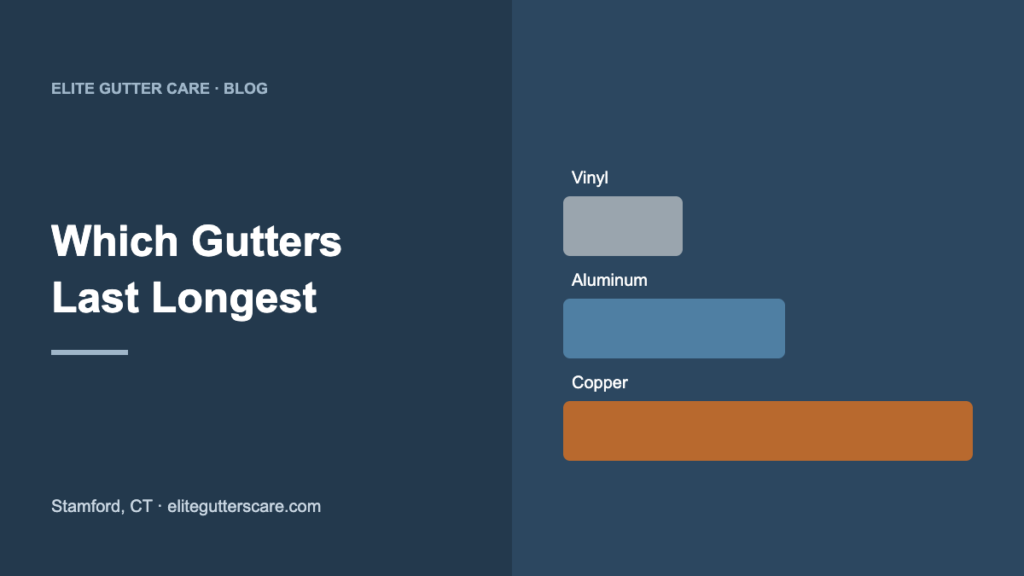
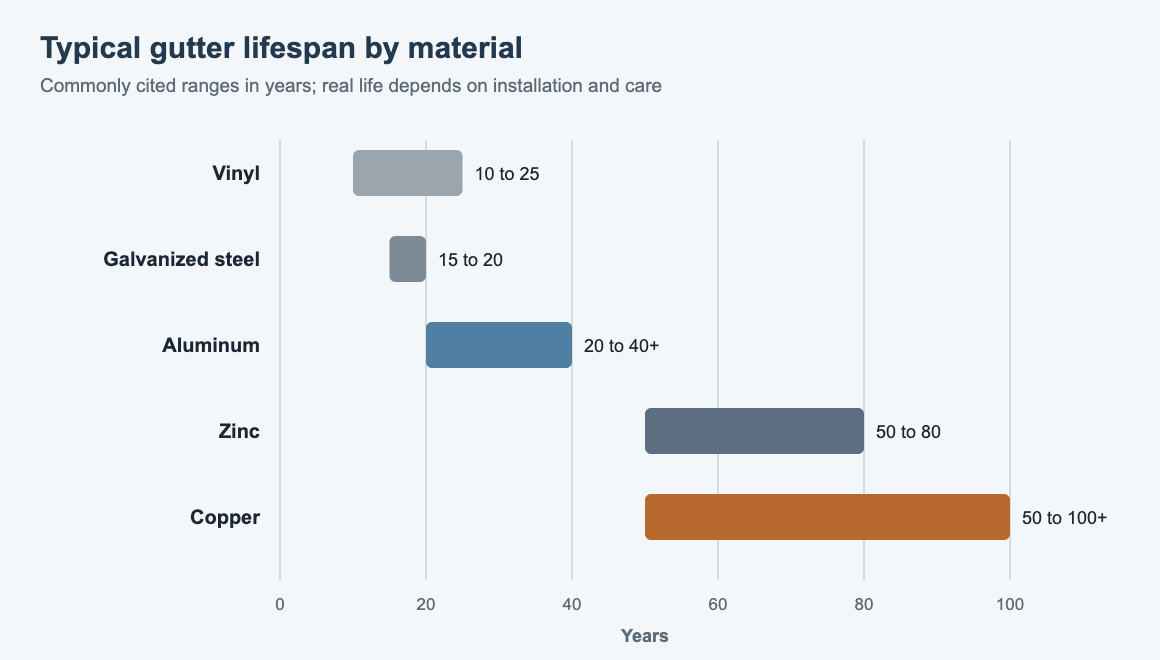
Copper gutters last the longest. Well installed copper commonly lasts 50 years or more, and copper downspouts can go much longer. Zinc and stainless steel come next, then aluminum and galvanized steel. Most sources put vinyl last.
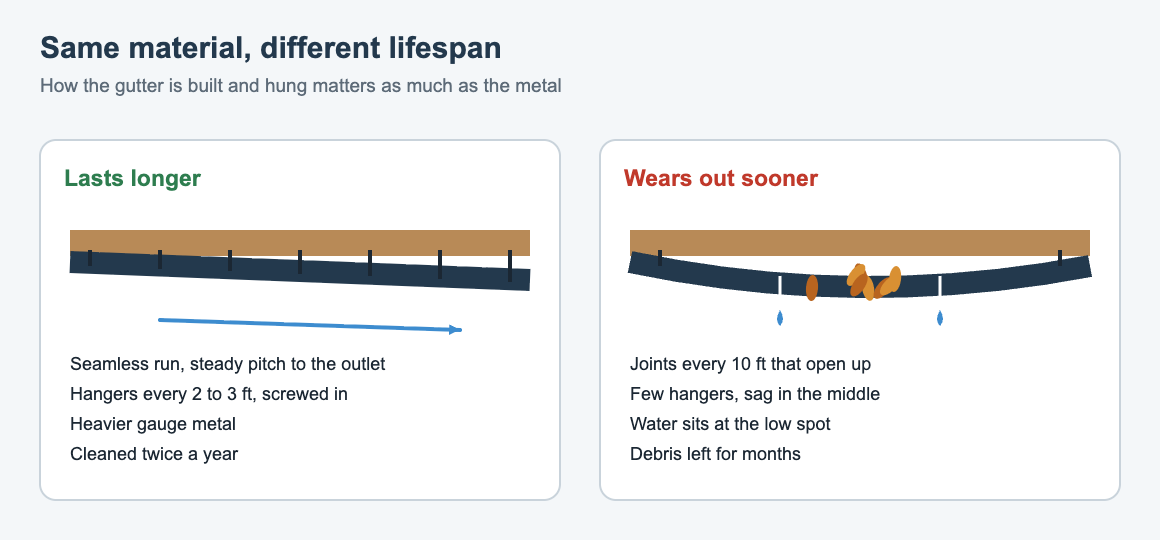
Actual lifespan on your house depends on the gauge of the metal, how the gutters were hung, how close you live to salt water and how often they are cleaned.
Short answer
- Longest lasting: copper, commonly rated at 50 years or more. Zinc and stainless steel also last for decades.
- Most common in Connecticut: aluminum, usually rated at about 20 years and often lasting 30 or more when it is thick and well installed.
- Galvanized steel is typically rated at around 20 years. Vinyl estimates vary, and it handles cold poorly.
- Thicker metal, seamless runs, close hanger spacing and regular cleaning all push a gutter toward the long end of its range.
- Salt air near Long Island Sound and repeated freeze and thaw shorten the life of most materials.
In this article
Gutter lifespan by material
| Material | Typical lifespan | Notes |
|---|---|---|
| Copper | 50 to 100+ years | InterNACHI and NAHB list copper gutters at 50+ years, copper downspouts at 100 |
| Zinc | 50 to 80 years (contractor estimates) | Published figures vary more than for other metals |
| Stainless steel | 50+ years (contractor estimates) | Rare on homes, mostly custom work |
| Aluminum | 20 to 40 years | NAHB lists 20 years, InterNACHI 20 to 40+ |
| Galvanized steel | About 20 years | Rusts once the zinc coating wears through |
| Vinyl | About 10 to 25 years | InterNACHI lists 25+; contractor guides are lower because vinyl gets brittle in cold |
Ranges combine the InterNACHI life expectancy chart, the NAHB study of home component life expectancy and contractor guides. Real lifespans vary with installation, climate and maintenance.
Material by material
Copper
Copper does not rust. Over time it forms a brown and then green patina that protects the metal underneath. That is why InterNACHI and the National Association of Home Builders both put copper gutters at the top of the list. Copper suits older and historic homes in towns like Greenwich, New Canaan and Westport, and it pairs well with slate and cedar roofs. Two details matter: every part of the system, including hangers, end caps and elbows, should be copper, because mixing metals causes corrosion where they touch. And the seams need to be soldered properly. Our guide to copper gutters and how they compare to aluminum goes deeper, and we install them through our gutter installation service.
Zinc and stainless steel
Both last for decades and both are uncommon on Connecticut homes. Zinc develops a gray patina similar to copper’s green one. Published lifespan estimates for zinc vary more than for any other material, so treat any single number with caution. Stainless steel is strong and does not rust, but it is mostly seen in custom architectural work.
Aluminum
Aluminum is the standard choice in Fairfield County. It does not rust, it is light enough to hang on almost any fascia, and it comes in many colors. Lifespan figures range from about 20 years in the NAHB study to 20 to 40 years in InterNACHI’s chart. Where a particular aluminum gutter falls in that range comes down to thickness and installation. Thinner standard gauges are common on homes. Heavier .032 inch aluminum is less likely to sag or dent under snow, ice and ladders, which is why This Old House and many installers recommend it for snowy climates.
Galvanized steel
Steel is strong, so it resists dents and holds its shape under snow load. The weak point is the zinc coating. Once scratches or standing water wear it through, the steel rusts, usually from the inside of the trough where debris holds moisture. InterNACHI and NAHB both list galvanized gutters at around 20 years.
Vinyl
Vinyl gutters are cheap and easy to install yourself, and contractor guides generally rate them shortest lived (InterNACHI’s chart is more generous at 25+ years). They get brittle in cold weather and can crack under ice or when hit by a ladder, and they sag in summer heat. In a climate with Connecticut’s freeze and thaw swings, vinyl is a poor long term choice.
Gutter lifespan estimator
Pick your material and a few details about your house. The estimator shows the typical range for that material and where in the range your gutters are likely to land.
Gutter lifespan estimator
Based on commonly cited ranges. It is a guide, not a guarantee.
What shortens or extends gutter life
| Factor | Shortens life | Extends life |
|---|---|---|
| Metal thickness | Thin stock that dents and sags | Heavier gauge, such as .032 inch aluminum |
| Seams | Joints every 10 feet that open with freeze and thaw | Seamless runs with joints only at corners and outlets |
| Hangers | Wide spacing, nails in soft wood | Hidden hangers screwed in every 2 to 3 feet, closer in snow country |
| Pitch | Flat spots where water sits | Steady slope toward each downspout |
| Maintenance | Wet debris sitting in the trough for months | Cleaning at least twice a year |
| Location | Salt air and spray near the shoreline | Inland sites, regular rinsing near the coast |
| Winter | Ice buildup and ice dams pulling on the gutter | Clean gutters going into winter, attic heat loss under control |
Stamford sits on Long Island Sound, and This Old House notes that the salt and moisture in coastal air can speed up corrosion of aluminum gutters, which is relevant for homes in Shippan, the Cove and other neighborhoods near Long Island Sound. Inland towns trade salt for harder freezes, and freeze and thaw is tough on joints and hangers; see winter gutter problems in Connecticut.
Of all these factors, cleaning is the one you control. Leaves and grit that sit wet in a gutter hold moisture against the metal, add weight to every hanger and freeze in winter. Regular gutter cleaning slows corrosion and takes weight off the hangers, and gutter guards help on lots with heavy tree cover.
Signs your gutters are near the end
- Rust spots or holes in steel gutters, especially inside the trough
- Cracks or splits in vinyl
- Seams that keep leaking after being resealed
- Sections that sag again soon after being rehung
- Gutters pulling away because the fascia behind them has rotted
- Peeling paint and water marks on the siding below the gutter line
- Pooling water or erosion around the foundation even when the gutters are clean
One or two of these can usually be repaired. When problems keep coming back along most of the house, replacement is often the better use of money. Our gutter repair team can tell you which situation you are in, and our article on signs your gutters need repair lists the early warnings.
Which gutters make sense for a Connecticut home
For most houses around Stamford, we suggest seamless aluminum in a heavier gauge. It is rated for 20 to 40 years, comes in many colors and removes the joints that cause most winter leaks; more on how seamless gutters are made.
Copper is worth it when you want gutters that will outlast the roof, or when the house calls for it architecturally. Older colonials, Tudors and homes with slate roofs are typical examples. Vinyl is better left to sheds and garages.
Whatever the material, ask how the gutters will be hung, what gauge the metal is, and where each downspout will discharge.
FAQ
What type of gutters last the longest?
Copper. InterNACHI and the NAHB put copper gutters at 50 years or more and copper downspouts at around 100 years. Zinc and stainless steel also last for decades.
How long do aluminum gutters last?
Commonly cited figures range from about 20 years to 40 years. Thicker metal, seamless runs, secure hangers and regular cleaning push aluminum toward the long end.
How long do copper gutters last?
Copper gutters are commonly rated at 50 to 100 years, and copper downspouts can last even longer when the system is installed with matching copper parts.
Does gutter thickness matter?
Standard residential aluminum is .027 inch. Heavier .032 inch aluminum is less likely to sag or dent under snow, ice and ladders.
Do seamless gutters last longer?
Seams are a common failure point because freeze and thaw opens them over time. Seamless gutters only have joints at corners and downspout outlets, which removes most of those weak spots.
How often should gutters be replaced?
There is no fixed schedule. Replace gutters when repairs stop holding: repeated leaks at seams, rust through, cracking or sections that sag again soon after being rehung.
Are vinyl gutters a good idea in Connecticut?
Usually not for a house. Vinyl becomes brittle in cold weather and can crack under ice, so it tends to have the shortest life of common gutter materials here.
Planning new gutters?
We install seamless aluminum and copper gutters across Stamford, Fairfield County and Westchester. Estimates are free, and pricing depends on your house and the material you choose, so call or send the form for yours.
Call (203) 399-2793
Related articles