Why Ice Dams Form and How Gutters Can Help Prevent Them
An ice dam is a ridge of ice that builds up along the lower edge of a roof and holds back water from melting snow. That water has nowhere to go but sideways and under the shingles. In Connecticut, ice dams are a common cause of the ceiling stains and wet insulation people find in late winter.
Gutters get blamed for ice dams more than anything else on the house. They don’t create them. Their condition does decide how much damage an ice dam does. Below we explain why ice dams form, what actually stops them, and where gutters fit in.
Short answer
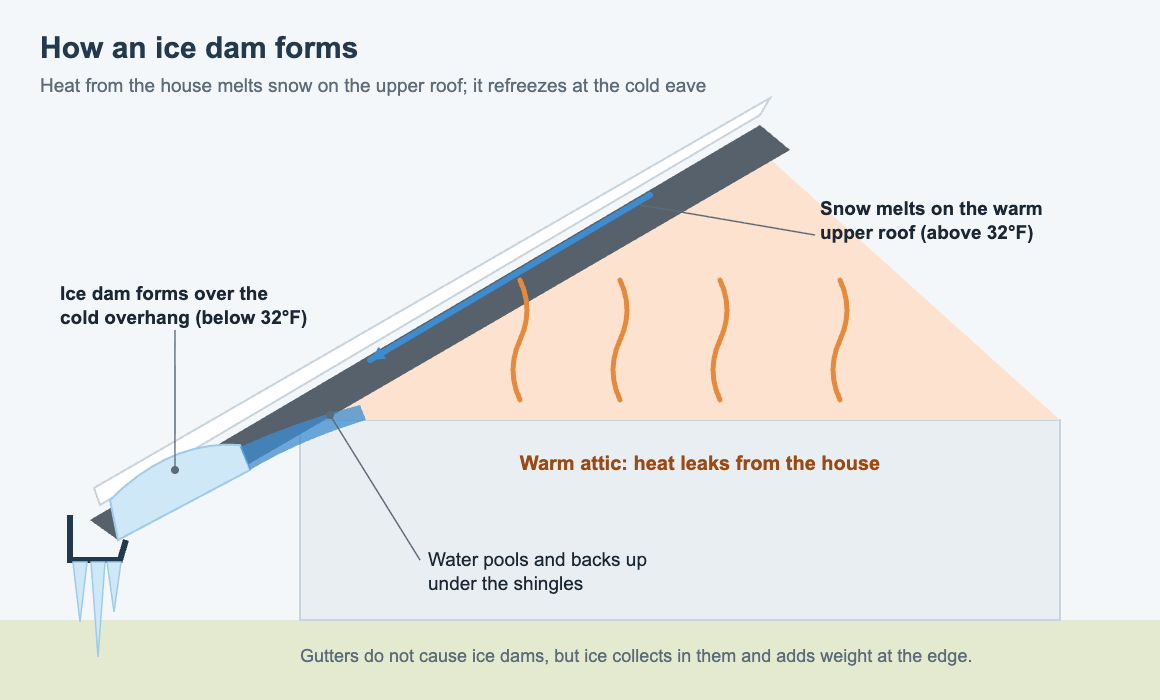
- Ice dams form when the upper part of a roof is above 32°F while the edge stays below freezing. Snow melts higher up, runs down and freezes again at the cold eave.
- The heat that melts the snow almost always comes from the house, through air leaks and thin insulation in the attic.
- Gutters do not cause ice dams. Clogged or loose gutters let the ice grow heavier and tear gutters off the fascia.
- The lasting fix is air sealing and insulation in the attic. Clean, well secured gutters and a roof rake reduce the damage while you get there.
- Avoid chipping ice, rock salt and climbing on an icy roof.
In this article
How ice dams form
The University of Minnesota Extension, one of the standard references on ice dams, describes the condition simply: higher parts of the roof’s outer surface stay above 32°F while lower parts stay below it. Three things have to happen at once.
- There is snow on the roof. Snow is both the source of the water and an insulating blanket that keeps the roof deck warmer.
- The outside air is below freezing. Over the overhang, where there is no heated space underneath, the roof stays at outdoor temperature.
- The roof deck above the attic is above freezing. Warm air leaking from the house and heat moving through thin insulation warm the underside of the roof. The snow on top melts from below.
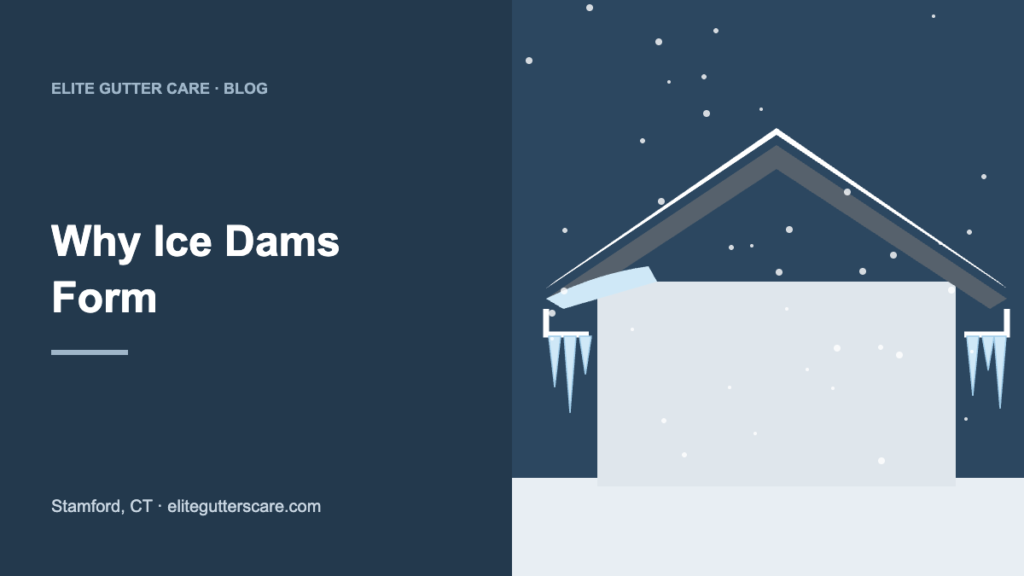
Meltwater runs down under the snow until it reaches the cold overhang and freezes. Each day the ridge of ice grows. Eventually water pools behind it, finds the gaps between shingles and backs up under them. Asphalt shingles overlap so water runs off; a pond sitting on them gets in at every joint.
Sun matters less than people think. The University of Minnesota notes that heat from the house is the primary cause. That is why two identical houses on the same street can behave so differently. One has a well sealed attic and stays clear, the other grows a wall of ice and icicles every January.
Connecticut’s coastal winters suit ice dams well. Normal January lows at Bridgeport sit in the mid 20s, and highs often climb above freezing, so snow that melts in the afternoon refreezes at the eaves overnight.
Do gutters cause ice dams?
No. InterNACHI, the home inspector association, states plainly that gutters do not cause ice dams to form. Houses without gutters get ice dams too, on the shingles themselves. What gutters do is give the ice a place to collect right at the coldest part of the roof.
Two things follow from that:
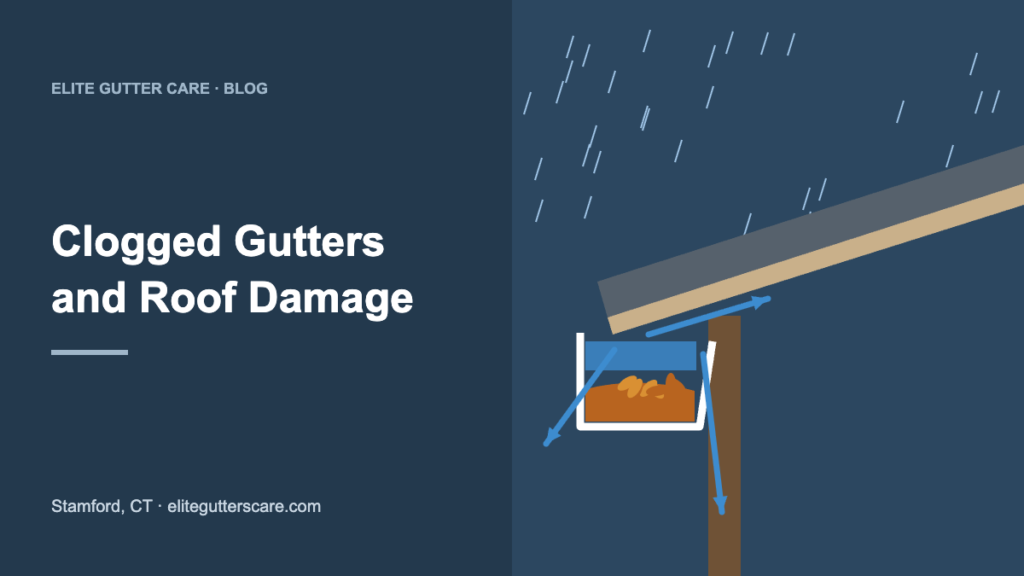
- A gutter full of frozen leaves fills with ice faster and holds more of it. The extra mass sits on the hangers and the fascia.
- A gutter that is loose, poorly pitched or fastened to soft wood can be pulled down by the weight of the ice. FEMA’s snow load guide notes that ice dams create a concentrated load at the eaves, and one inch of ice weighs a little under 5 pounds per square foot.
Clean, tight gutters make it much less likely that a section ends up on the lawn after a bad week in January. Cold weather causes other gutter trouble too, from frozen downspouts to leaking seams; see winter gutter problems in Connecticut.
What ice dams damage
| Area | What happens | Signs to look for |
|---|---|---|
| Roof covering | Water backs up under shingles | Ice ridge at the eaves, icicles, lifted shingles |
| Attic and insulation | Insulation gets wet and stops insulating | Damp or compressed insulation, frost on nails |
| Ceilings and walls | Water runs into the living space | Brown stains, bubbling paint near exterior walls |
| Gutters and fascia | Ice weight bends hangers and pulls gutters loose | Sagging runs, gaps behind the gutter, split seams |
| Wood structure | Roof sheathing and fascia stay wet and rot | Soft fascia, peeling exterior paint in spring |
Some of this damage appears months later. Peeling paint on exterior walls and mold in the attic often show up in spring, long after the ice is gone.
Check your ice dam risk
Answer six quick questions about your house. The result tells you how likely ice dams are and where to start.
Ice dam risk check
Answer for your house. Nothing is sent anywhere.
How to prevent ice dams
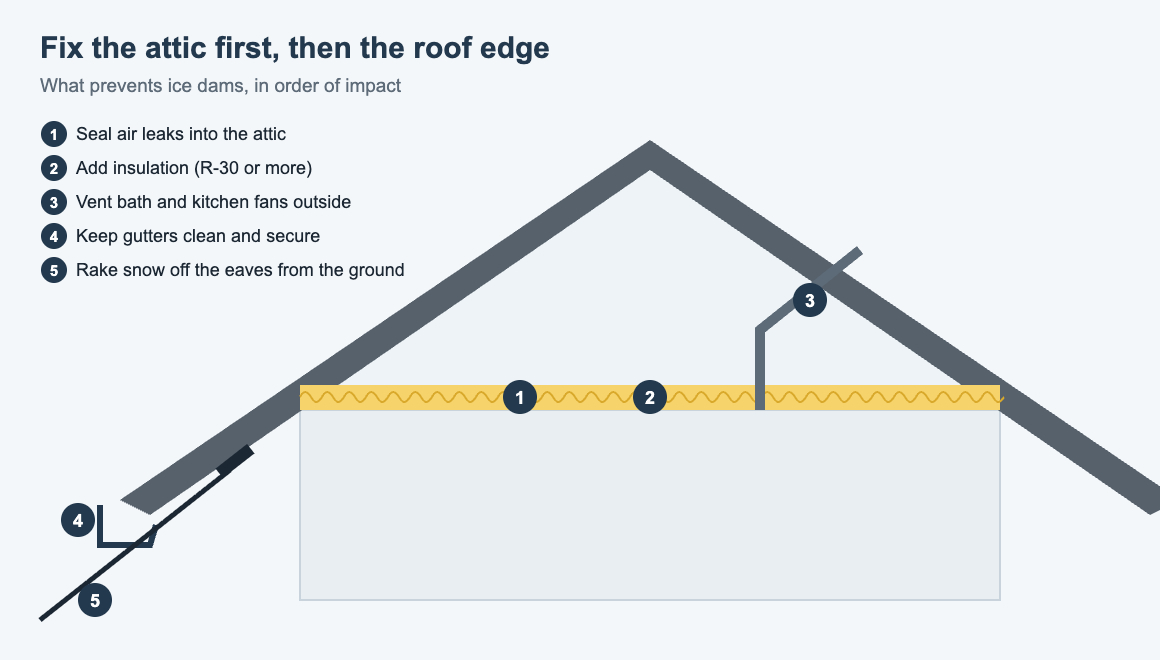
1. Seal air leaks into the attic
The University of Minnesota identifies air leakage as the major way heat reaches the roof in many homes. Common leaks are around attic hatches, recessed lights, plumbing and electrical penetrations, chimneys and bathroom fans. Energy Star notes that air sealing combined with attic insulation can help prevent ice dams. Sealing comes first, because insulation does not stop moving air.
2. Add insulation
Building Science Corporation’s ice dam digest recommends at least R-30 of insulation under a ventilated attic roof, and more in colder climate zones. Many older Connecticut homes have far less, especially Capes and homes with finished attic rooms where the roof slopes over the living space.
3. Keep exhaust out of the attic
Bathroom and kitchen fans that end in the attic dump warm, moist air right under the roof deck. They should vent outside. Ventilation helps keep the roof deck cold, but sources such as the University of Minnesota treat it as a supplement to sealing and insulation, not a replacement.
4. Get the gutters ready before snow
Clean gutters drain the melt that does reach them and hold less ice. A cleaning after the last leaves fall, with every downspout flushed, is the gutter part of ice dam prevention. Our gutter cleaning service covers this, and gutter repair handles loose hangers and soft spots before they are loaded with ice.
5. Rake the first few feet of snow
Pulling snow off the lower part of the roof with a roof rake, while standing on the ground, removes one of the three conditions. Keep clear of power lines and stop short of scraping the shingles.
6. Ice barrier membrane at the next reroof
The International Residential Code requires an ice barrier along the eaves where ice damming is a known risk, running from the edge to at least 24 inches inside the exterior wall line. It does not stop ice dams from forming, but it limits leaks when they do. If your roof is due for replacement, make sure it is included.
Prevention methods compared
| Method | What it does | Limits |
|---|---|---|
| Air sealing the attic | Stops warm air from heating the roof deck | Needs access and care around lights and chimneys |
| More attic insulation | Slows heat moving into the attic | Works best after air sealing |
| Venting exhaust fans outside | Removes a direct heat and moisture source | One part of the picture |
| Clean, secure gutters | Drains melt and reduces ice weight at the edge | Does not stop ice dams from forming |
| Roof rake | Removes snow from the eaves | Effort after every storm, can scrape shingles if used roughly |
| Heat cable | Melts channels for water to escape | InterNACHI says cables rarely work and use electricity |
| Ice barrier membrane | Limits leaks under shingles | Installed only when the roof is replaced |
If you already have an ice dam
- Use a roof rake from the ground to clear snow above the dam so less water feeds it.
- Some homeowners lay a nylon stocking filled with calcium chloride across the dam to melt a drainage channel. Use calcium chloride, not rock salt, which damages roofing, gutters and plants.
- Do not chip the ice with a hammer, axe or shovel. It damages shingles and gutters.
- Do not climb a ladder onto an icy roof edge.
- Watch the ceilings and walls under the dam, and take photos of any staining for your records.
Once the weather breaks, check the gutters. Bent hangers, split seams and gaps behind the gutter are common after an ice dam, and fixing them before the next storm is much cheaper than replacing a section that falls. Here are the signs your gutters need repair to look for.
FAQ
What causes ice dams?
Ice dams form when the upper roof is warmer than 32°F while the eaves stay below freezing. Snow melts on the warm part, runs down and refreezes at the cold edge. The heat almost always comes from the house through air leaks and thin attic insulation.
Do gutters cause ice dams?
Gutters are not the cause, and houses without gutters get ice dams too. Clogged or loose gutters make the damage worse, because ice collects in them and its weight can pull them off the fascia.
Do gutter guards prevent ice dams?
Guards keep leaves out, so gutters drain better and hold less frozen debris. They do not stop ice dams from forming, because the cause is heat loss through the roof.
Are heat cables worth it?
Heat cables can melt drainage channels through the ice, but they do not stop ice dams from forming and they use electricity. InterNACHI notes they rarely work well. Treat them as a last resort after air sealing and insulation.
How do I remove an ice dam safely?
Rake snow off the lower roof from the ground, and use calcium chloride (not rock salt) in a stocking laid across the dam to melt a channel. Do not chip the ice or climb onto an icy roof.
Does homeowners insurance cover ice dam damage?
Policies often cover interior water damage from ice dams but not the cost of removing the ice, and coverage varies. Check your own policy and document any damage with photos.
Can ice dams damage gutters?
Ice is heavy, and an ice dam concentrates that weight at the edge of the roof. Bent hangers, split seams and sections pulled off the fascia are common after a bad winter.
Get your gutters ready for ice season
We clean gutters by hand, flush every downspout and look over the hangers and seams while we are on the ladder. Estimates are free, and pricing depends on your house, so call or send the form for yours.
Call (203) 399-2793
Related articles